All economic information of African countries
The US administration led by President Joe Biden is gradually unveiling its cooperation strategy with Africa. The strengthening of democracy is put forward, but Washington also aims to counter the influence of competitors such as China and Russia.
On April 27, the bill submitted to the United States Congress by Democrat Gregory Meeks, chairman of the Foreign Relations Committee of the United States House of Representatives, was adopted with 419 "yes" votes against 9 "no" votes. to counter Russia's "malicious activities" in Africa.
In recent weeks, the EU has multiplied agreements aimed at securing African gas supplies. A maneuver that jeopardizes strategies to limit global warming and its impact on food insecurity.
The President of the African Development Bank Group, Akinwumi Adesina, warns: "Africa must prepare for the inevitability of a global food crisis. He was speaking on Africa's priorities as a guest of the Atlantic Council's Africa Center.
With soaring wheat prices for more than a year, roots, tubers and other cereals such as fonio, often considered secondary, are once again popular. Many countries are now accelerating their policy of incorporating these foods into baked goods.
In 2021, growth in sub-Saharan Africa, the main driver of African growth, was estimated at 4%, according to the World Bank. However, this upward trend should be affected by the consequences of the Russian-Ukrainian crisis which is already impacting consumer prices.
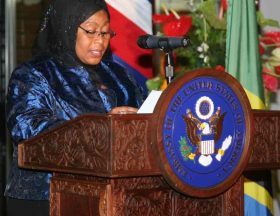
With many ongoing development projects in the infrastructure, transport and energy sectors, Tanzania is trying to attract more investors to its economy. An ambition carried by its president, Samia Suluhu Hassan, in office since 2021.